Cleat: Launched! 🔗🚢
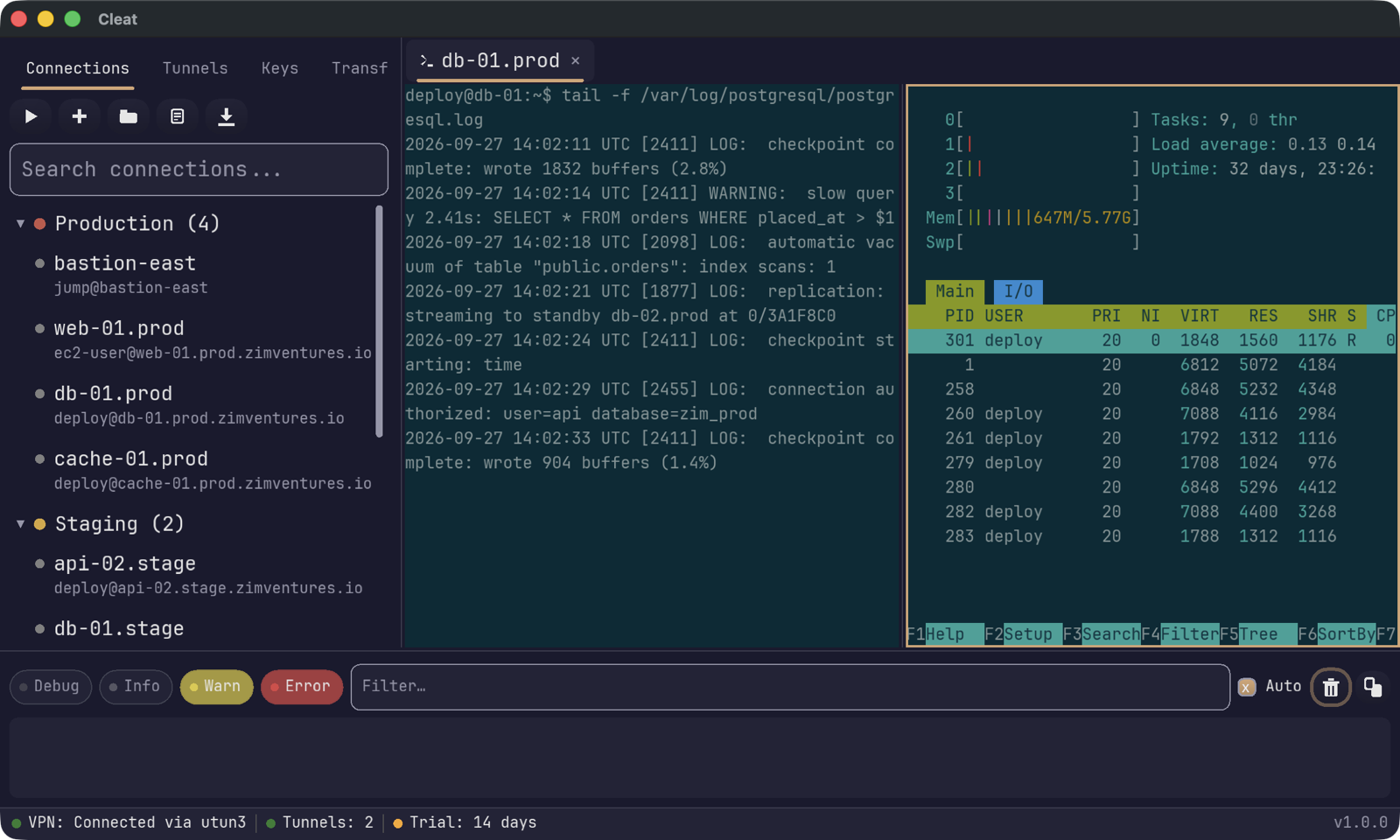
At the start of 2026 I created lolrus. A desktop application for inspecting and managing S3-compatible storage. There are many bucket managers out there - but this one is mine.
Up to that point, I’d been using MobaXTerm and iTerm2 to manage the infrastructure for Granite and Pin Sheet Pro. They worked OK, but I wanted more. A native desktop application for server management. An all-in-one solution that allowed me to easily login, see dashboards, run analysis, and even do some basic monitoring.
The idea took root: what if there was a terminal application with a full plugin system? I nice interface that allowed me (and others) to easily extend the functionality to our custom needs. It needed to be more than just a terminal emulator. No…cleat needs to be my one-stop-shop for all things cloud administration. I’d like the ability to manage my Docker Swarm, host nodes, Linode Object Store, and more.
There are many terminal emulators out there - but this one is mine.
Introducing: Cleat
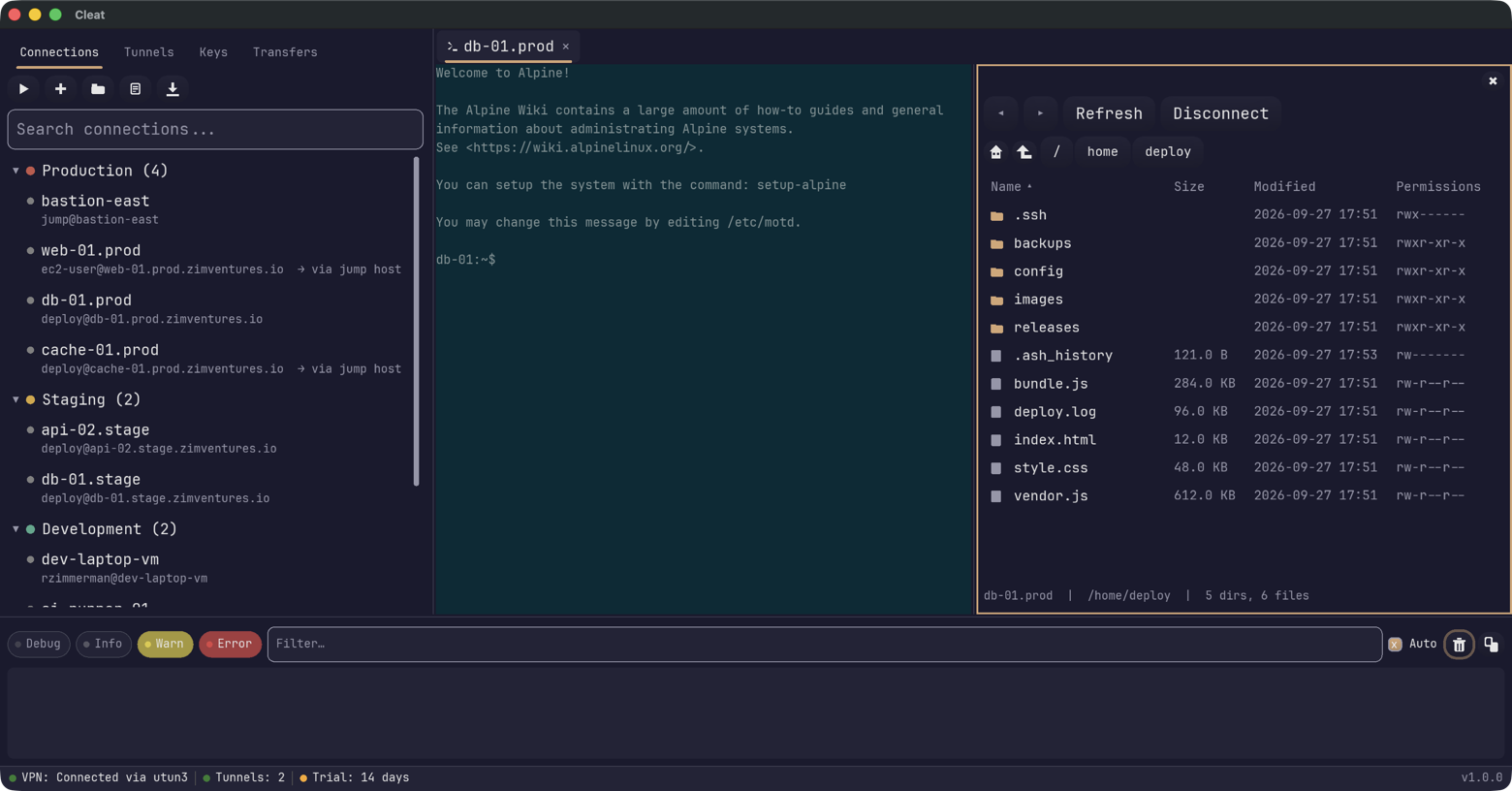
Viva Desktop Apps
Over the last number of years, the web app crew has infiltrated desktop app development through the trojan horse that is Electron - among other frameworks. These apps are fully featured, but never felt native, nor performant. In fact, when I was working on DevHuddle’s first product, we used Electron. The performance was aggravating and memory usage was embarrassing.
As if bringing poorly performant applications from the web to the desktop wasn’t enough - they brought SaaS subscription fees along with them. Boo.
Folks like Jason Fried have been claiming that folks are getting tired of not owning their software and paying subscription fees for damn near everything. It’s frustrating - and he’s on to something.
Enter: C++.
Cross-platform game development has always been a slight challenge, but certainly an achievable result. With a healthy amount of #ifdef conditionals, a singular codebase could be shared for Windows, MacOS, and Linux. Why can’t we do this for desktop applications too? Frameworks like Qt have existed for decades but are starting to feel stale.
I’ve written before about some of the adventures in developing Cleat. Cooking up a retained mode UI library (Spry) would have been a huge undertaking before agentic development. Now it was just a few weekends of work. And an effort that yielded big results.
Cleat uses SDL and some other technologies familiar to the game development crowd. And why not? It’s perfectly suited to multi-platform development. The slightly different architectural change is that we’re not optimizing for Frames Per Second (FPS). Quite the opposite. We want to use as little CPU as possible. In fact, I spent one weekend optimizing the loop to make use of MacOS process sleeping - gotta keep that laptop battery topped off!
Plugin System
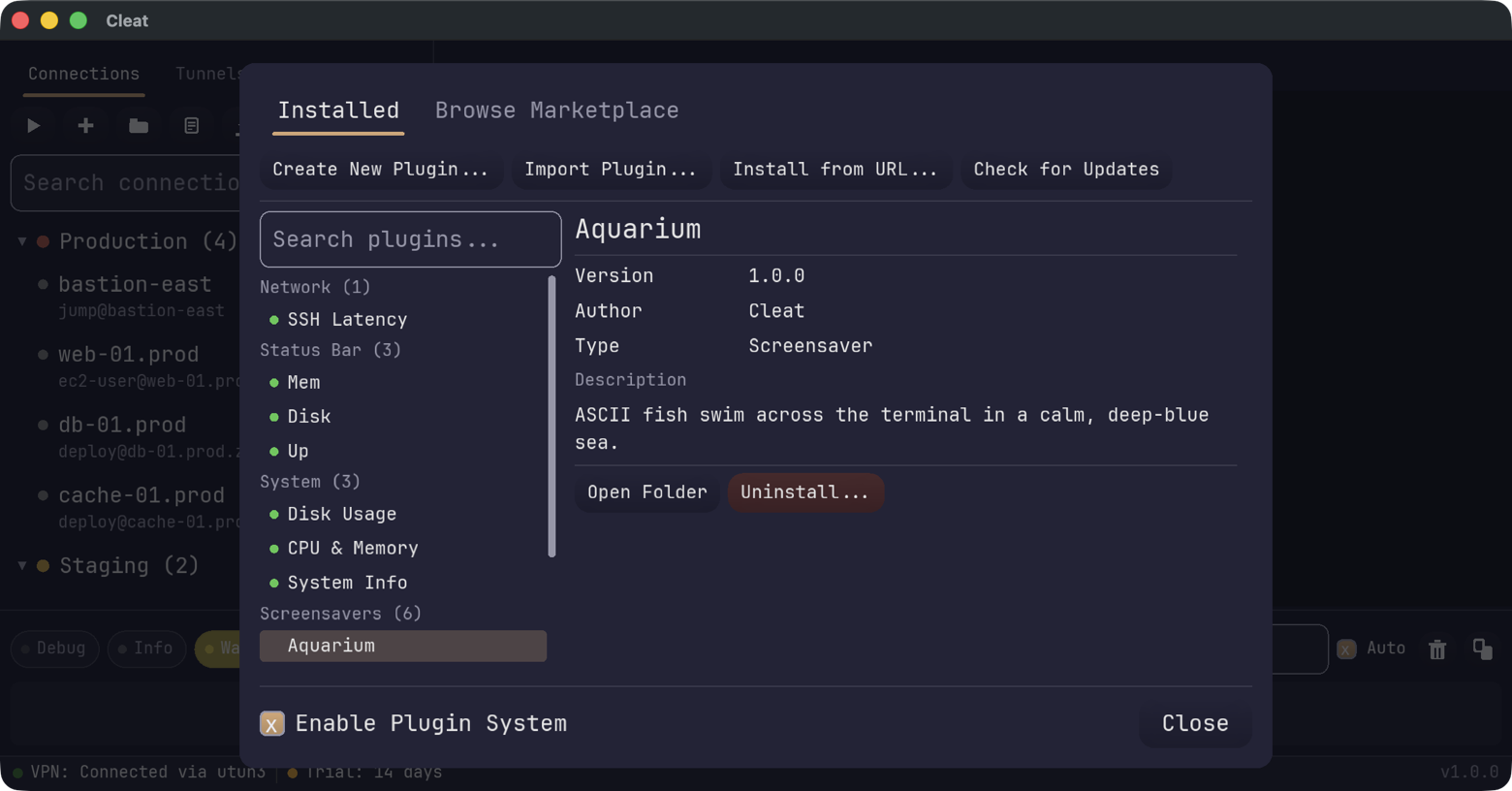
Cleat is opinionated - but I’m not a monster! A plugin system was developed to allow users to extend Cleat to fit their needs. Continuing with my game-dev roots, Lua is being used as the scripting language of choice for plugin authoring. Along with complete documentation, my goal for this feature is to allow end users a lot of customization options.
Where Cleat is & Where It’s Going
There’s a pretty solid base feature set for the initial beta release.
- Connection profiles (folders, jump hosts, etc)
- SSH keys (including generation!)
- SFTP
- xterm-256color, tabs & splits
- Tunneling
- Docker Swarm
- Command palette
- Theming
- Keychain support
The Road Ahead
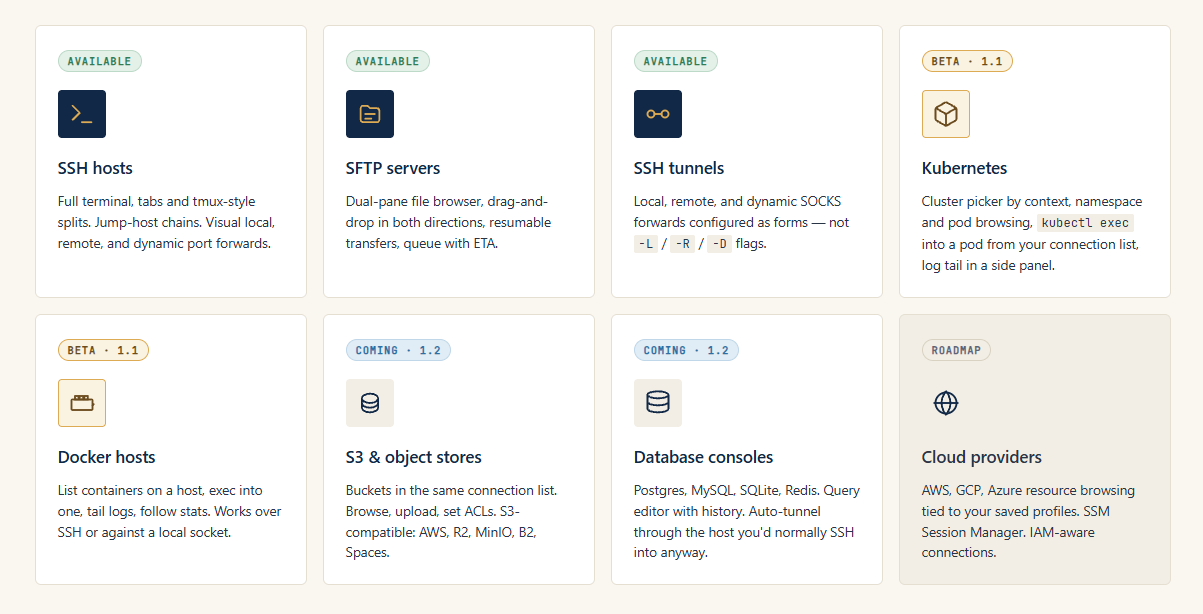
With the Cleat public beta officially launched, focus turns now to user feedback and executing on the roadmap. I realize that server management may be going the way of the dodo (with serverless infra, and agentic server management) but until SSH goes away…I’ll clutch terminal access like a tyrant.
A lot of my focus will be on building out a rock-solid agentic development pipeline. My current workflow is Claude Code with lots of manual interaction for the planning cycle. I’d like to get this tightened up to include more automated tests, architecture agents, and just generally build out a workflow that ensures the development process can scale, should Cleat turn out to be useful to others.
Lolrus -> Cleat
As mentioned at the start, lolrus was kind of the inspiration for cleat. Having a way to manage S3-compatible buckets (I use Linode Object Store) within Cleat is next.
Pricing to reward brave crewmembers
I get it - not everyone wants to try out a new piece of software. In order to entice folks to hop on board, Cleat has limited time pricing. For every 50 licenses sold, the discount will go down by 5%. I kicked things off at a 75% discount.
Adventurers: all aboard!
Check out the free 14 day trial for macOS, Linux, and Windows.
