Why We're Building a Custom Newsletter Platform for Our Clients (And How AI Made It Possible)
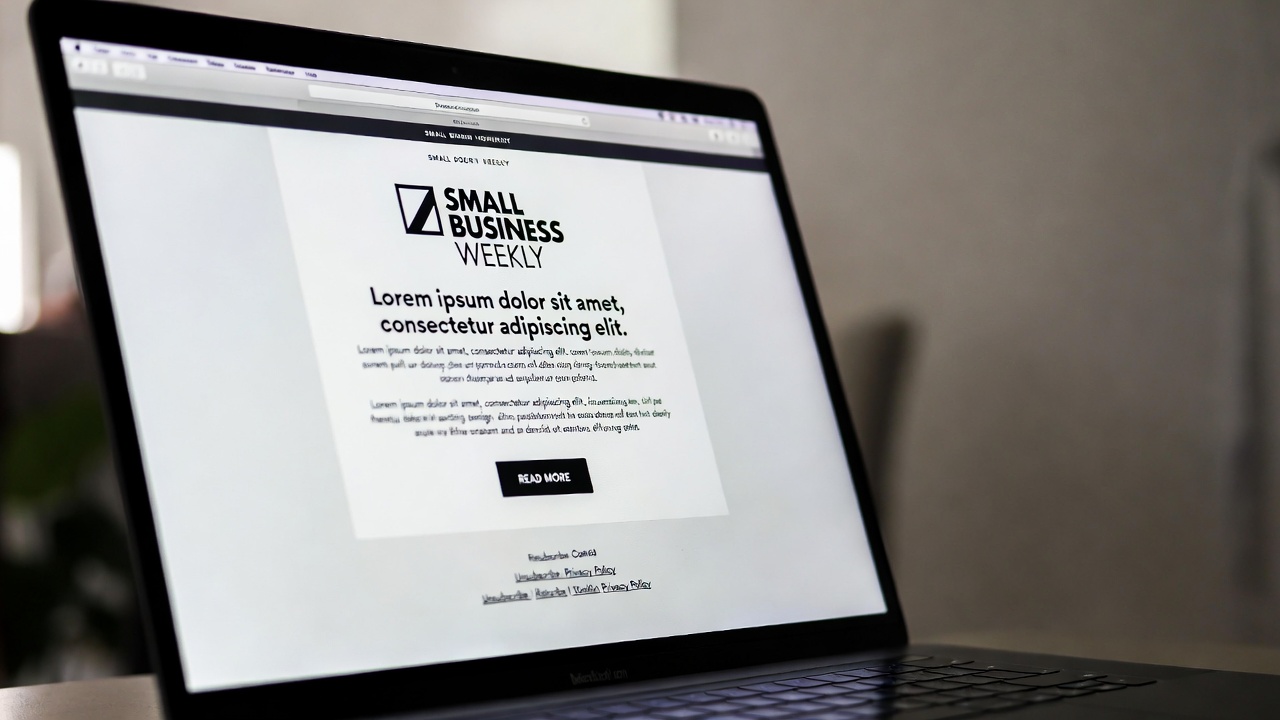
When a client told me that her Squarespace email newsletter add-on was costing nearly as much as the hosting itself, I knew something was broken. She’s a small business owner — not a marketing agency. She just wants to send a monthly update to her customers without wrestling with Mailchimp pricing tiers or figuring out yet another disconnected tool.
That conversation kicked off something I’d been thinking about for a while: what if email newsletters were simply included with your website?
The Problem With “Just Use Mailchimp”
If you run a small service business — a contracting company, a body shop, a photography studio — your marketing stack shouldn’t require a PhD to manage. But that’s exactly what happens when you cobble together a website host, a separate email marketing platform, a contact form service, and maybe an analytics dashboard.
Each one has its own login. Its own billing. Its own learning curve. And every one of them wants to charge you a monthly subscription that creeps upward as your business grows.
For the small businesses I work with here in Southern New Hampshire — from Hollis and Nashua to Milford and Amherst — that complexity is the enemy. Owners are busy running their business. They don’t have time to become marketing software experts.
Build It In, Don’t Bolt It On
Rather than pointing clients toward yet another third-party platform, I decided to build newsletter functionality directly into the Zimventures hosting platform. When it launches, every client website will have access to email marketing tools that live right alongside their site — same login, same dashboard, no extra accounts to manage.
Here’s what’s coming:
A drag-and-drop email editor. No coding required. Clients will be able to build professional-looking newsletters using a visual block editor — add text, images, buttons, and columns by simply dragging them into place. Start from a blank canvas or pick a pre-built template to get going fast.
Subscriber list management. Import existing contacts, add signup forms directly to your website, and let the platform handle the rest. Subscribers can manage their own preferences, and unsubscribes are processed automatically so you stay compliant without lifting a finger.
Built-in analytics. See who opened your email, what links they clicked, and how your campaigns perform over time. No need to cross-reference data from three different dashboards — it’s all in one place.
Reusable templates. Sent a great email last month? Click a button and use it as the starting point for your next one. Build up a library of your best-performing designs over time.
Reliable delivery on your own domain. Emails go out from your business domain — not from some generic marketing platform address — which means better deliverability and a more professional appearance in your customers’ inboxes.
And the best part? It’s included with your hosting plan. No surprise add-on fees. No per-subscriber pricing that punishes you for growing your list.
Why Building Custom Is Better Than Integrating
I get the question a lot: “Why not just integrate with an existing email service?” It’s a fair question. Here’s my honest answer.
Cost control. Third-party newsletter tools charge based on subscriber count or sends per month. Those costs get passed to you. By building the platform in-house and managing the email infrastructure directly, I can keep costs predictable and baked into your hosting — not tacked on as a growing line item.
Simplicity for clients. When your newsletter tool is built into the same platform as your website, there’s no context-switching. You’re not bouncing between tabs, copying and pasting content, or trying to make two different systems agree on what your brand looks like. Everything lives in one place because it was designed to work together from day one.
No vendor lock-in. If Mailchimp changes their pricing tomorrow — and they have, repeatedly — my clients aren’t affected. The platform I’ve built is under my control, and I can evolve it based on what my clients actually need rather than what a VC-backed SaaS company decides to prioritize.
Privacy and data ownership. Your subscriber list is your data, stored on infrastructure I manage — not sitting in a third party’s database being used to train algorithms or sell advertising profiles.
How AI-Assisted Development Made This Realistic
A few years ago, building a full-featured newsletter platform as a solo developer would have been a multi-month marathon. Today, the landscape is different — and I want to be transparent about how.
I used AI tools throughout the development process, and they were game-changers.
The project started with a detailed design phase. I worked with Claude (Anthropic’s AI assistant) to co-author a comprehensive design document — a 12-section specification covering everything from data models to email rendering to compliance requirements. This wasn’t “ask an AI to write some code.” It was a structured back-and-forth where I brought the domain knowledge and product vision, and Claude helped me think through edge cases, draft the architecture, and pressure-test the design.
From that spec, we generated 35 GitHub tickets across 9 development epics, each with detailed acceptance criteria. Those tickets became the implementation roadmap.
Then Claude Code and GitHub Copilot took over the heavy lifting on implementation. Because each ticket had clear requirements and the design document provided full architectural context, these AI coding tools could work against my actual codebase with precision. The workflow looks like this: point the AI at a ticket, reference the design doc, review the output, iterate, and ship.
This is what people mean when they talk about “agentic development” — AI isn’t replacing the developer, it’s amplifying what a solo developer or small team can accomplish. The strategic thinking, the product decisions, the client relationships — that’s still me. But the velocity of going from a validated design to working code has increased dramatically.
For other developers and small agencies in the New Hampshire area thinking about building custom solutions for their clients: this approach is very doable. The tooling has reached a point where the bottleneck is no longer “can I build it?” but rather “do I have a clear enough spec?” Start with the design. Be thorough. Let the AI tools handle the implementation grunt work.
Built for Businesses Like Yours
The newsletter platform is currently in active development and will be available to all Zimventures clients soon. It’s designed specifically for the kinds of businesses I work with — contractors, service providers, freelancers, and local shops across Southern New Hampshire and beyond.
If you’re a business owner in Hollis, Nashua, Brookline, Milford, Amherst, or anywhere in the Granite State, and you’re tired of juggling disconnected tools and unpredictable software costs, I’d love to chat. Zimventures offers web design and hosting built for small businesses — no bloated platforms, no surprise fees, and now, email marketing included.
Interested? Get in touch for a free consultation.
Zimventures is a web design and hosting company based in Hollis, New Hampshire, serving small businesses throughout Southern NH and beyond. We build fast, professional websites with the tools you need to grow — all in one place.
